


ECW's Strategic Plan
Building on a decade of impact, Education Cannot Wait (ECW) is sharpening its focus to go further and faster for children caught in the world’s most severe crises. As needs grow and funding shrinks, a more agile, locally-led and effective education-in-crises response is needed. ECW chooses to act and the 2027–2030 Strategic Plan is our roadmap.
The plan is set against an urgent and shifting global landscape. More than 230 million school-aged children across 60 countries are affected by crises – an increase of at least 35 million over the past three years. At the same time, global aid for education is projected to fall by US$3.2 billion by the end of 2026. The stakes have never been higher.
Our mission is clear: to protect learning for children in crises – rapidly, safely and inclusively.
Results Since Inception
ECW’s proven impact
supported
partners


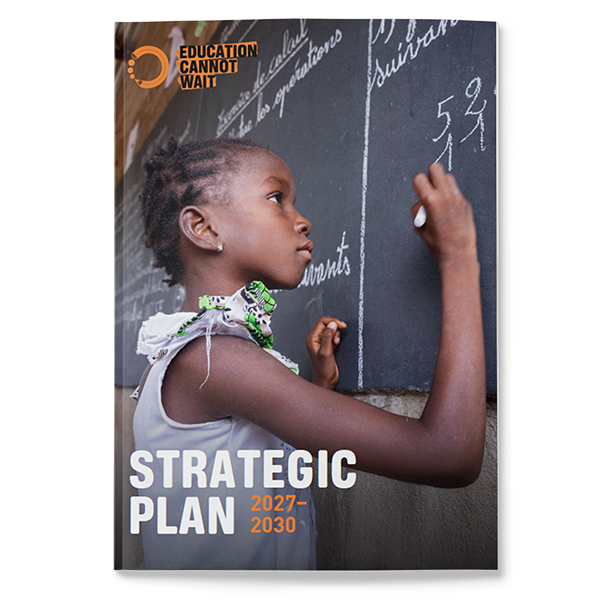
Strategic Plan 2027–2030
ECW's third Strategic Plan covers the period 2027–2030. Building on lessons and evidence from the Fund’s first decade of operations, the plan streamlines our investment model and renews our commitment to the most vulnerable children and adolescents – delivering education that is rapid, safe and inclusive.
The plan sets out ECW's ambition for 2027–2030:
- Reach 10 million crisis-affected children and adolescents.
- Mobilise US$600 million through a focused portfolio of 13–18 priority countries.
- Deliver faster, more flexible funding through the Crisis-Oriented Resilience and Emergency (CORE) modality – a single, integrated multi-year investment approach.

ECW’s work is anchored in three Strategic Objectives:
 Strategic objective 1
Expand and accelerate financing and commitment for education in crises
Needs are growing while global aid for education is shrinking. ECW mobilises rapid and predictable financing, elevates political commitment, and pursues new and innovative approaches to mobilize resources – so that funding reaches children when and where it is most needed.
 Strategic objective 2
Rapidly fund safe, gender-equitable and inclusive education in crises
ECW finances rapid, risk-informed education responses so that children in places facing the most severe crises can learn and thrive. We use high-quality data on crisis needs and outcomes to guide where and how we invest, and work across humanitarian, development and peace efforts to ensure support reaches those left furthest behind.
 Strategic objective 3
Facilitate shifting power and resources to local and national actors
ECW increases funding, visibility and decision-making power for local civil society – including organizations led by women, youth, refugees, teachers and persons with disabilities – to achieve effective, sustainable and context-relevant results.
ECW's investment modality
modality
Designed and implemented by country-level partners, CORE bring together crisis preparedness, emergency response and resilience-building into a single, streamlined approach.

CORE Programmes
CORE programmes will deliver flexible, multi-year funding across 13–18 priority countries – reducing fragmentation, cutting transaction costs and getting resource to children faster.

Acceleration Facility
The Acceleration Facility continues to support new tools and innovations for the sector – while it maximises collective impact and improves efficiency and strategic alignment with the new CORE approach.

PGI
Protection, gender equality and inclusion are embedded across every investment.

Climate, disaster and environmental resilience
Climate, disaster and environmental resilience is integrated into all ECW programmes, so learning continues as climate shocks become increasingly frequent.

Increased localisation
Increased localisation means more funding as directly as possible to local organisations and greater leadership for those closest to the children we serve.