


ECW in State of Palestine
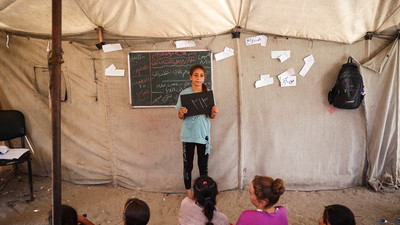
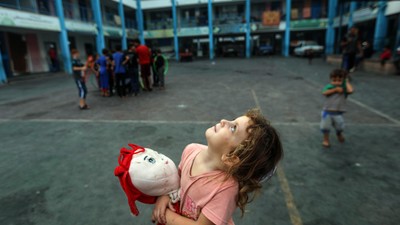
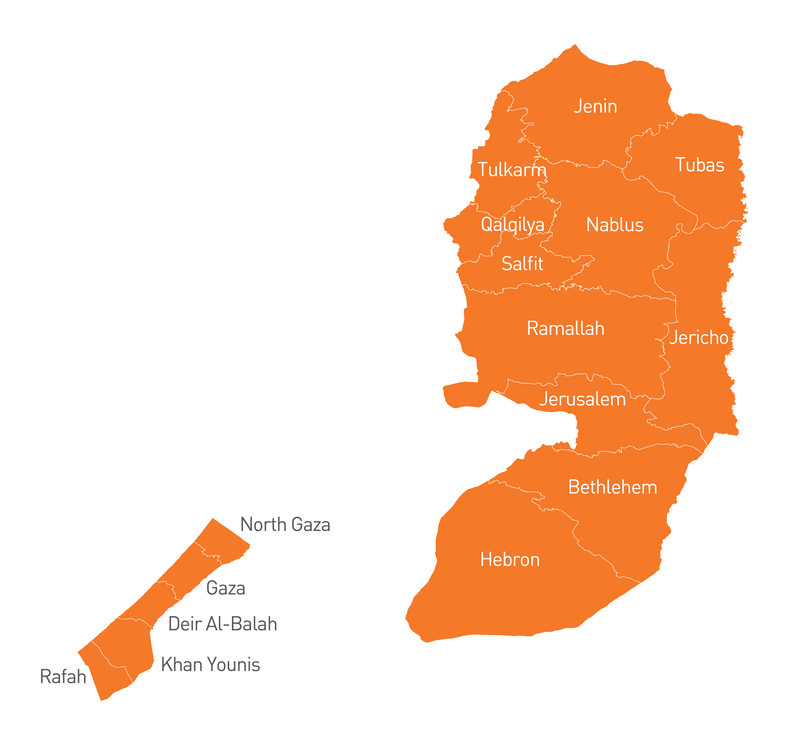
Since October 2023, when the escalation in hostilities began, well over half a million children in Gaza have been cut off from formal education, with schools across the strip damaged or destroyed and many repurposed as shelters for displaced families. This has left children without safe spaces to learn and exposes them to heightened protection risks. Even prior to 2023, the protracted crisis in the State of Palestine had resulted in unsafe learning environments for millions, and schools were frequently attacked or occupied for military purposes. Additionally, poverty and restricted services limit academic capabilities, putting education at risk.
Education Cannot Wait investments have been supporting partners and education programmes in the State of Palestine since 2018, with initiatives focusing on strengthening the academic infrastructure, supporting educators, and providing ongoing training to address the academic and psychosocial needs of students. Recent emergency response grants are supporting urgent mental health and psychosocial interventions, temporary learning spaces and protective learning opportunities for crisis-affected girls and boys. While a ceasefire has offered a critical opportunity to scale up humanitarian assistance, children’s needs remain acute.
National Counterparts
Ministry of Education
Programme Info
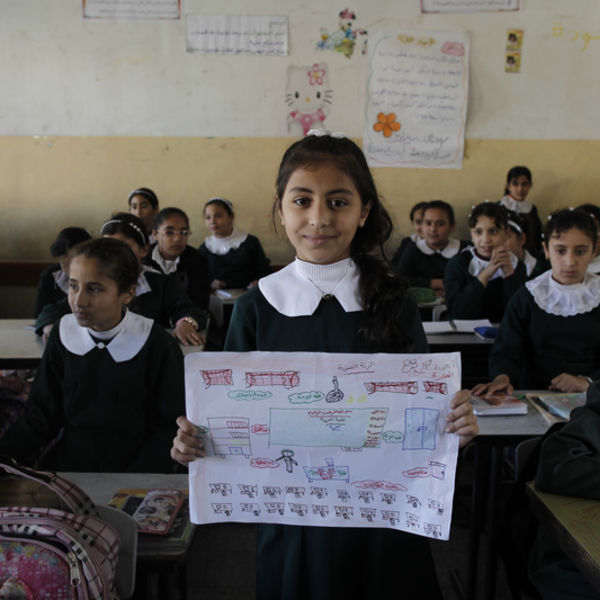
Once at school, many children and adolescents are still unsafe. Access to education remains compromised by school attacks, threats against school staff and students, and military takeover of school facilities. In the Gaza Strip, the blockade and multiple escalations of hostilities have repeatedly damaged and destroyed an already fragile education infrastructure.
Amid widespread poverty, an economy in decline and a breakdown of public services, the COVID-19 pandemic only worsened the situation in both territories. After the closure of education facilities in March 2020, it was imperative to reach over a million children with distance learning.
Unaddressed trauma negatively impacts the educational outcomes and can cause developmental challenges. Therefore, ECW funding supports children who have been detained with remedial education and vocational training to help reintegrate them into the formal education system. Furthermore, the Multi-Year Resilience Programme (MYRP) supports the changing needs in terms of access to water; sanitation and hygiene (WASH); mental health and psychosocial support (MHPSS); and distance learning through infrastructure improvements, teacher and counsellor training and support in the form of educational materials.
Programme Components
- Providing vocational training and remedial education for children in conflict. This programme is a comprehensive package of rehabilitative services for children under house arrest and ex-detainee children. Boys participate in vocational assessments, with the vast majority receiving vocational training referrals in construction, masonry, cooking, electrical and mechanical work, and computing. Additionally, funding supports remedial classes in Arabic, chemistry, English and mathematics. Classes are offered both virtually and in person at the students’ homes or at vocational centres, taking into consideration safety and social distancing standards. The remedial classes focus on facilitating the reintegration of children into the formal education system.
- Recruiting and training teachers and counsellors. Grantees recruit hundreds of predominantly female education staff, including support teachers and psychosocial counsellors, in the Gaza Strip and West Bank. Teachers are assisted with classroom instruction in Arabic and mathematics, focusing on the special needs of children with disabilities; children with conflict-related injuries; and children with chronic health issues. Additional personnel, including counsellors and teachers, receive training in the provision of psychosocial support, benefiting thousands of children.
- Strengthening school infrastructure. Supports infrastructure work that contributes to an improved learning environment for hundreds of students, mostly girls. In Gaza, schools are identified for rehabilitation, and then the adaptive and maintenance work is undertaken. Infrastructural improvements include accessible facilities for students with disabilities, upgraded WASH facilities (particularly for girls) and energy efficiency features.
- Supplying learning materials for children. Grantees procure and deliver literacy and numeracy materials to students at all the schools supported in the West Bank. The materials support remote learning, especially for the period of school closures due to COVID-19. In Gaza, funding provides third and fourth graders with additional materials, including Arabic and mathematics worksheets. Science and technology learning toolkits are distributed to enhance learning in Gaza’s schools. Grantees provide desks, tables, and chairs to schools in the West Bank.
For more information on ECW's work in the State of Palestine, please contact Country Lead Nasser Faqih (nfaqih@unicef.org).
News & Stories
Related News & Stories
The Better Learning Programme, implemented by NRC and funded by ECW, delivers mental health and psychosocial support alongside education for displaced children in...