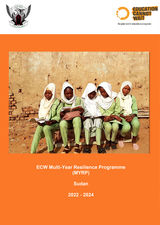



ECW in Sudan
Since fighting erupted in Sudan in April 2023, it has become one of the world’s most severe humanitarian crises – pushing millions of children and adolescents to the brink of survival. Thousands of civilians, including children, have been killed or injured, while attacks on civilian infrastructure and the use of schools for military or shelter purposes have severely disrupted essential services. Entire communities have been displaced and protection risks are acute. Even prior to the recent resurgence of armed conflict, violence, political instability and climate-induced disasters resulted in many children out of schools; those in schools faced limited resources, overcrowded classrooms and a poor quality of education. Today, the education crisis in the country is even more severe, with widespread learning disruption.
Education Cannot Wait investments have been supporting partners in Sudan since 2021, with programmes focusing on building inclusive learning environments, increasing enrolment rates, teacher training, meeting the physical and psychosocial needs of children, and more. New investments aim to address the unprecedented learning crisis triggered by the most recent outbreak of conflict.
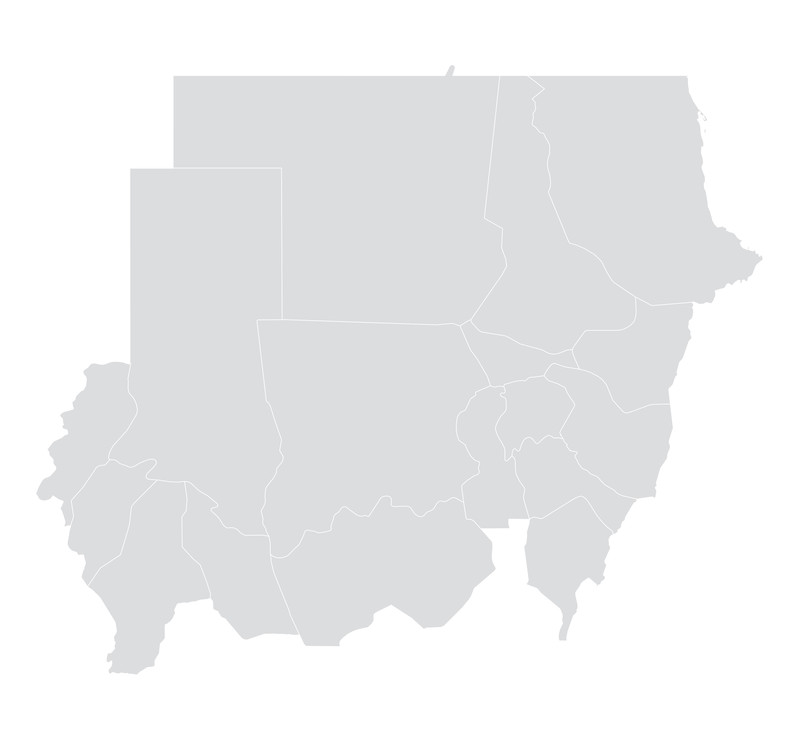
National Counterparts
The Federal Ministry of Education
Programme Components
- Addressing mental health and psychosocial needs. Grantees provide improved mental health and psychosocial support (MHPSS) services to students and educators. Teachers receive training on child protection; referral pathways (for psychosocial support, health, protection, and other matters); child safeguarding; MHPSS; and effective teaching for children dealing with the aftermath of trauma and violence.
- Establishing safe learning environments. Supports construction of temporary learning spaces; the rehabilitation of existing classrooms; the provision of learning supplies; upgraded WASH facilities; improved lesson plans; and inclusivity training for educators across all learning levels.
- Improving enrolment rates. Grantees provide financial support for marginalized children and adolescents to reduce access barriers. Re-enrolment campaigns are launched to reach out-of-school students, along with training for educators to support their transition back to learning.
- Promoting inclusivity in schools. Provides dignity kits to girls for improved menstrual health management (MHM). Grantees train education personnel to increase awareness and communication of female health and protection-related issues, such as female genital mutilation, child marriage and gender-based violence. Funding also supports community engagement to promote school enrolment and attendance for children with disabilities.
- Supporting out-of-school students. Grantees provide internally displaced, refugee, returnee, nomadic and host community children with accelerated learning programmes to reintegrate them into formal learning environments. Content is individualized to meet a wide array of needs and catch them up to peers.
For more information on ECW's work in Sudan, please contact Country Lead Maarten Barends (mbarends@unicef.org) and Programme Manager Eddie Dutton (rdutton@unicef.org).
News & Stories
Related News & Stories
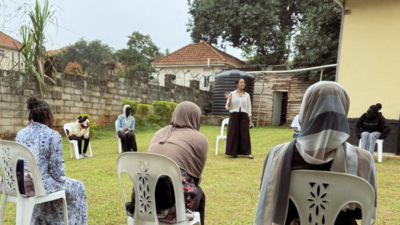
Human rights education programme empowers Sudanese refugee girls in Uganda to become advocates for their communities, part of an ECW-funded initiative.
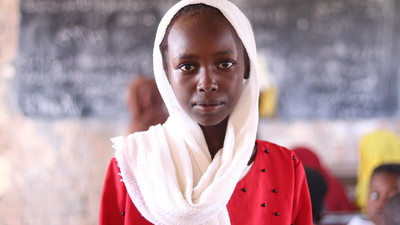
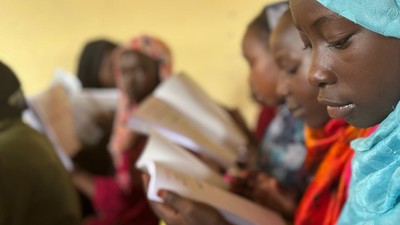
Communities and partners like the Norwegian Refugee Council are bringing schools back to life and students back to learning in Sudan through ECW-funded...