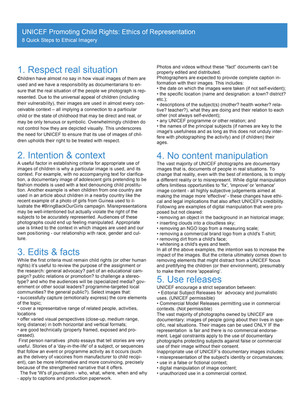

UNICEF's 8 Quick Steps to Ethical Imagery

Guidelines
Available Languages:
8 quick steps

The UNICEF 8 Quick Steps to Ethical Imagery outlines UNICEF's policy to protect and safeguard children's representation in photographs. Education Cannot Wait both follows and expects partners to follow all policies as outlined. The steps covered include respect for the real situation, intention and context, edits and facts, content manipulation, use of releases, questions to ask, avoidance of stereotypes and protection for at-risk children. It also includes a sample standard photo release and media copyrights forms.
Related Resources

Image
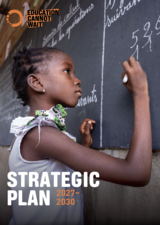
Strategic Plan cover

ECW’s Strategic Plan 2027 - 2030

Strategies & Policies
Language:
Image
Cover of NORRAG publication

NORRAG Policy Insights: The Humanitarian-Development-Peace Nexus at 10

Knowledge & Resources
Language:
Image
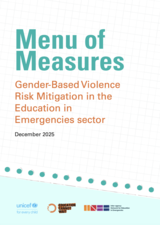
Cover of Menu of Meeasures

Menu of Measures for Gender-Based Violence Risk Mitigation in the Education in Emergencies Sector

Strategies & Policies
Language:
Image
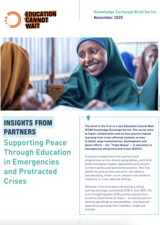
Peace Brief Cover

Insights from Partners: Supporting Peace Through Education in Emergencies and Protracted Crises

Advocacy Brief/Factsheet
Language:
Image
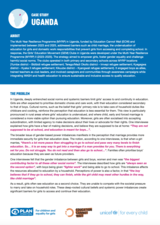
PLAN – Uganda Case Study Cover

Uganda Case Study: Girls’ Education Movement Clubs, 2025

Knowledge & Resources
Language:
Image
PLAN – South Sudan Case Study Cover

South Sudan Case Study: Engaging Local Women’s Organizations to Foster Gender Transformative EiEPC, 2025

Knowledge & Resources
Language: