

Education Cannot Wait Welcomes Switzerland’s Ambassador Dominik Stillhart as New ECW Executive Committee Co-Chair
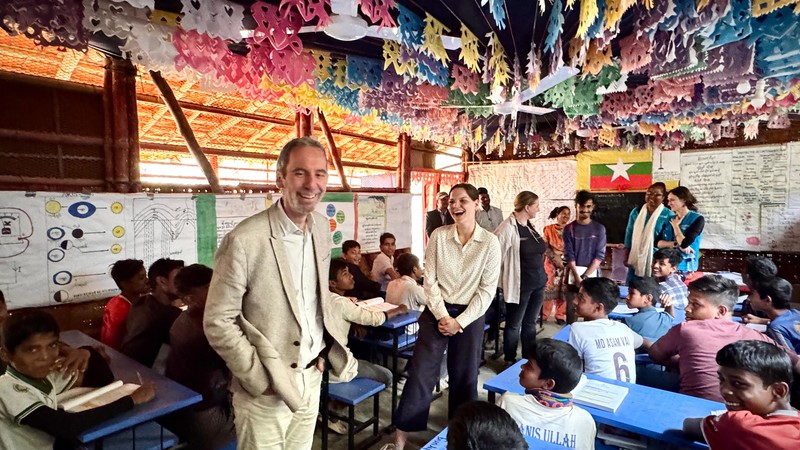
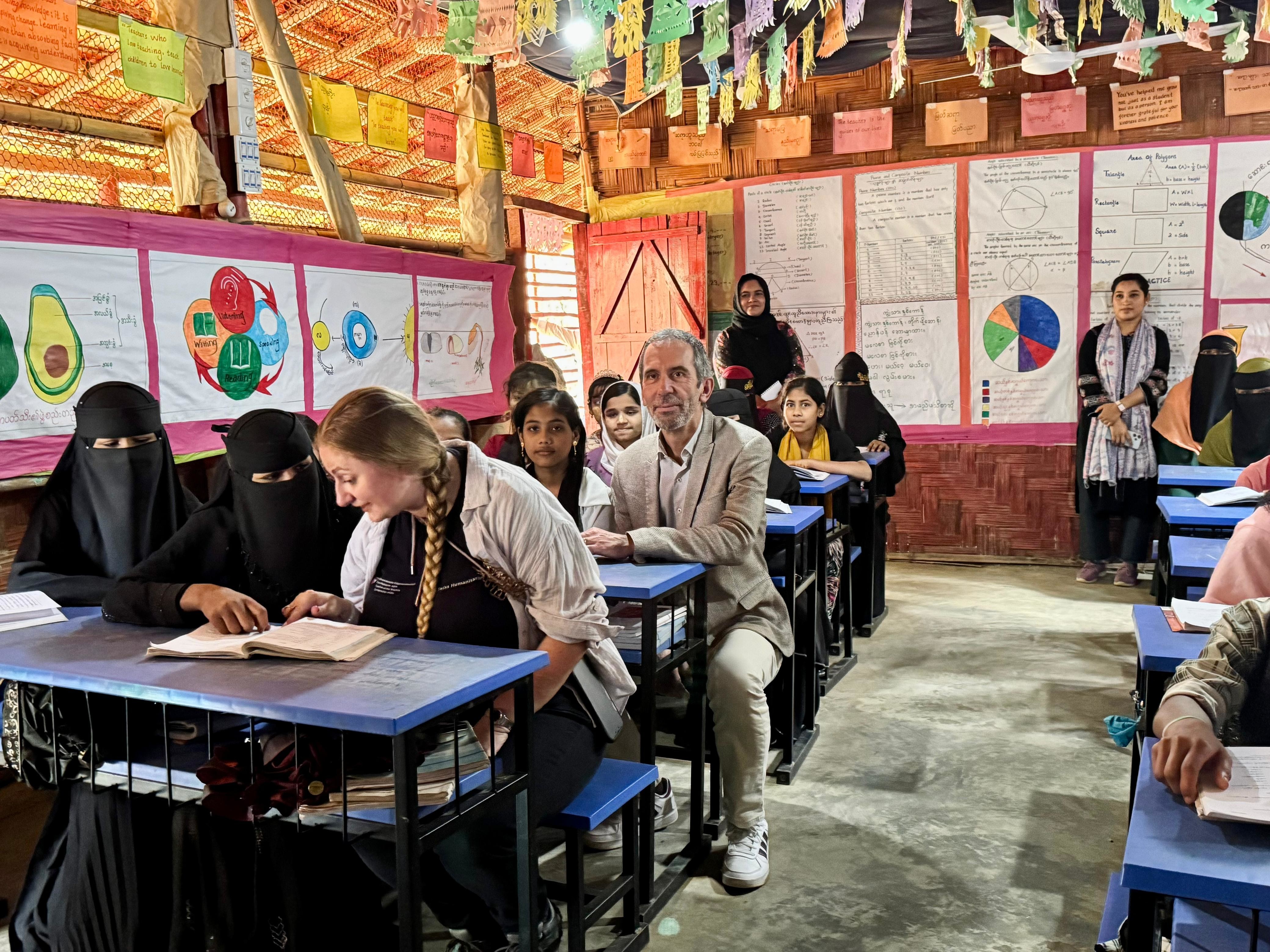
As new Co-Chair of Education Cannot Wait’s Executive Committee (ECW ExCom), Switzerland steps up its commitment to education in emergencies and protracted crisis (EiEPC). Building on its membership of the ECW ExCom since 2019, Switzerland succeeds Norway as Co-chair alongside Germany, bringing determination and energy to reinforcing education’s place on the humanitarian and nexus agendas.
Switzerland is dedicated to work with ECW and its partners to maximize impact on the education of crisis-affected children. In line with the Humanitarian Reset, this must be done in a way that facilitates and accelerates the “power shift” to local actors. Central to this is that ministries of education, local education authorities, national and community-based organizations, teachers and children lead discussions and decision-making about education in crisis contexts. It also means more inclusive governance structures at ECW.
The challenges are stark: escalating conflict, forced displacement, food insecurity, climate crises and public health emergencies have driven the number of crisis-affected children in need of education support to 234 million – a threefold increase since 2016.
Switzerland’s historical engagement in fragile countries and humanitarian action provides the foundation for its expertise. Education in all contexts is a human right, enabling other rights. Integrated with protection, it is lifesaving and critical for resilience, reconstruction, peace-building and preparedness in response to conflict and disasters.
Switzerland and ECW have already achieved much together for EiEPC. In 2023, they jointly hosted the ECW High-Level Financing Conference in Geneva, where the international community pledged USD 826 million to ECW. Geneva hosts several global EiE organisations including the Geneva Global Hub for EiE, which it co-founded with ten co-signatories, including ECW[1]. Since the EiE Hub’s launch in January 2021, a further 49 internationally-renowned entities have joined them in their commitment.
Switzerland’s co-chairing of the ECW ExCom will be guided by shared principles and approaches:
- Keep funding for education in emergencies at the top of the international agenda, particularly critical as humanitarian activities at country level are re-prioritised.
- Facilitate leadership by local education actors such as local authorities, non-governmental organisations and communities, while recognising and supporting the fundamental role played by teachers in quality education provision. Ensure direct, reliable, multi-year funding to local organisations and networks supporting the continuity of quality education in crisis contexts.
- Promote and facilitate a humanitarian-development-peace nexus approach, working hand-in-hand with existing systems and maximising the critical role of education preparedness and anticipatory action, in recovery, peace and security.
In the context of a funding and identity crisis in the humanitarian sector, Switzerland brings specific experience of supporting innovative financing in international cooperation. It is committed to exploring the potential for innovative financing for education in emergencies, building on its experience of engaging the private sector in financing progress towards SDG4. Switzerland is ready to lead a transition from a grant-making to an investment logic, partnering with the private sector. This is exemplified in its innovative financing approach in partnership with the Swiss Cantonal Banks. At the same time, further research is needed to understand the potential of Innovative Financing for Education in Emergencies (IFEiE). Through the Innovative Financing for Education to Leave No One Behind programme, SDC helps build evidence, identifying challenges like the time to deploy financing tools, measuring diverse learning outcomes and ensuring local actor involvement.
Finally, SDC brings expertise in vocational skills development in emergencies, demonstrating the feasibility of linking education to work in countries like Myanmar, Ethiopia, Niger, Mali and northern Mozambique. This approach combines foundational skills with vocational training, working closely with private enterprises to align learning with local economic needs and promote resilience and empowerment.
Switzerland looks forward to continuing to support the implementation of ECW’s strategy in collaboration with its partners, united in achieving ECW’s vision of “a world where all children and adolescents affected by crises can learn free of cost, in safety and without fear.”
[1] The others being the Global Education Cluster (GEC), the Inter-agency Network for Education in Emergencies (INEE), the International Committee of the Red Cross (ICRC), Switzerland, UNESCO, UNHCR, UNICEF, the Geneva Graduate Institute and the University of Geneva. https://eiehub.org/about/members
More featured content