

More Than 24 Million Children Affected by Conflict Need Mental Health Support
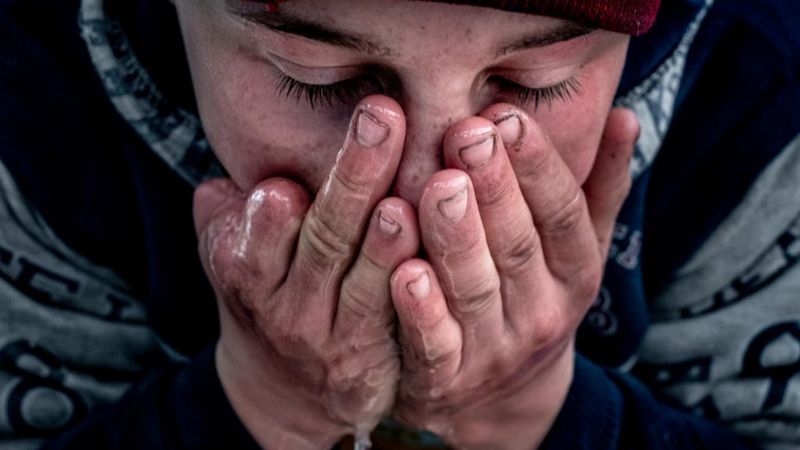
7.1 million children at serious risk of developing severe mental health disorders such as schizophrenia, bipolar disorder or PTSD
Originally published on Save the Children Australia
11 September 2019 – Millions of children living in war zones or forced to flee as refugees will require support to address mental health concerns, according to a new briefing paper released by Save the Children today, ahead of critical meetings at next week’s United Nations General Assembly.
‘Road to recovery: responding to children’s mental health in conflict’ reveals that of the 142 million children living in conflict zones, more than seven million are at serious risk of developing severe mental health disorders, such as schizophrenia, bipolar disorder, severe depression or anxiety, and severe post-traumatic stress disorder.
At least 24 million children – four times the child population of Australia – require some form of mental health support, either now or in the future.
“We know that mental health is a really big issue facing many Australians. But imagine being a child who’s seen family members killed in front of their eyes or fled to a refugee camp with no idea what the future holds or who is living in a war zone where it’s too dangerous to go to school because of the risk of shelling,” Save the Children’s Humanitarian Director Archie Law said.
“Tens of millions of children are in this position, having had their lives turned upside down because of war and conflict. They are suffering a range of mental health problems, yet rarely are the services needed to treat and support these children available because it simply isn’t being adequately funded.”
Save the Children’s analysis found that just 0.14 percent of all official development assistance between 2015-2017 went to programs related to child mental health support.
At the same time the number of children living in conflict zones has increased by 37 percent since 2010, while the number of verified grave violations against them – including killing and maiming, recruitment into armed forces and sexual violence – has increased by 174 percent.
“The scale of the mental health crisis for children in conflict is enormous, yet we don’t have the funding to match the need,” said Mr Law, who has a long history working in conflict and post-conflict settings including Iraq, Cambodia and several parts of Africa.
“That’s why we’re calling on countries meeting at the UN General Assembly this coming week, including Australia, to commit to increase funding to help the recovery of children affected by conflict.”
Specifically, Save the Children is urging donors like Australia to support the replenishment of the US$1.8bn Education Cannot Wait fund – providing nine million conflict affected children with the opportunity to learn and recover – and commit dedicated funding to integrate mental health and psychosocial support services within education in humanitarian settings.
Among those children requiring mental health support is 12-year-old Fatima*, who was in her home in Hajjah, Yemen, when an airstrike killed both of her parents and five siblings. Fatima’s leg was badly injured, and she needed operations to remove the shrapnel.
“I was unconscious and buried in the sand and rescue people were only able to help me and my sister. They took us to the hospital and that’s it. My leg was injured very badly to the extent that it was with no flesh. They (seven members of my family) were buried in the village,” Fatima said.
Fatima* now lives with her sister and aunt, Arwa*, who worries about her nieces’ mental state. Arwa* told Save the Children:
“Both girls wake up at night talking to us unconsciously. They are so sensitive. At night, they become angry and start crying.”
Through Save the Children’s global Stop the War on Children campaign, the organisation is campaigning to keep schools safe, stop the use of explosive weapons in populated areas, seek accountability for crimes against children and pursue new ways to support their recovery from the horrors of conflict. To find out more go to www.stopthewaronchildren.org.au.
###
For media inquiries contact Evan Schuurman on 0406 117 937 or Licardo Prince on 0401 777 917.
*Name changed to protect identity.
Notes to Editor:
In 2019, the World Health Organization estimated that 17% of adults living in conflict zones have mild to moderate mental health disorders, which would require non-specialised mental health support. Assuming that similar rates apply to children and adolescents, it is estimated that approximately 24 million children living in conflict today have mild to moderate mental health disorders needing an appropriate level of support. Of these, 5% (7.1 million) were estimated to be at risk of developing severe mental health disorders.
Education Cannot Wait’s ‘Stories from the Field’ series features the voices of our implementing partners, children, youth and the communities we support. These stories have only been lightly edited to reflect the authentic voice of these frontlines partners on the ground. The views expressed in the Stories from the Field series do not necessarily reflect those of Education Cannot Wait, our Secretariat, donors or UN Member States.
More featured content