

Breaking the Cycle by Investing in Girls’ Education
As we approach the end of the year, the grim Groundhog Day of the Syrian conflict trundles on. We’re back round to winter again. For the fifth year, millions of refugees will spend the coming months shivering and wet, trapped in a frigid, frozen limbo.
NGOs will issue their winter appeals fundraising for coats and blankets. TV news crews will file reports of the harsh conditions; tell stories of unimaginable suffering leavened with glimmers of hope and human resilience. Maybe they could just reuse last year’s footage?
Refugee lives aren’t lived to the rhythm of the news cycle. In between the snapshots we see, their needs are not reducible to lists of household items, their hopes are not limited to just warmth and survival.
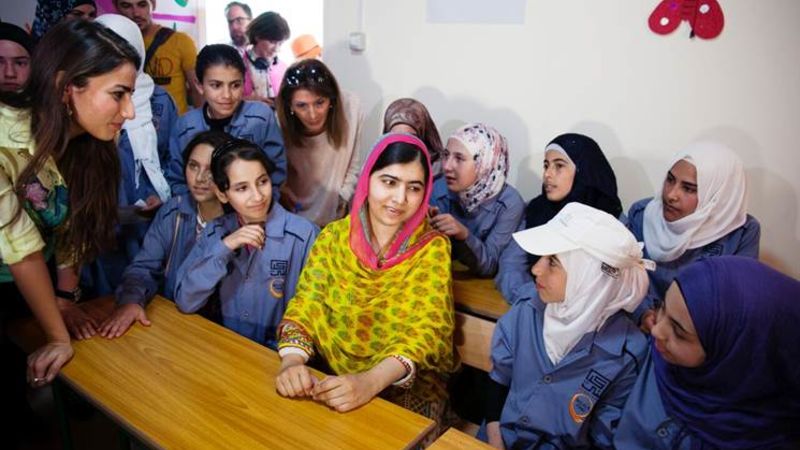
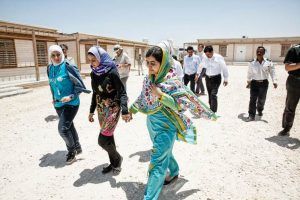
This was driven home for me last week working with a young Syrian called Muzoon Almellehan. At the centre of her life — which has taken her from Daraa in Syria to the UN in New York via refugee camps in Jordan and resettlement in the North of England —- is a fierce belief in her right to an education, regardless of the circumstances of her life. Moreover, she feels a responsibility to fight for this right not just for herself, or her Syrian sisters, but for all girls affected by conflict and disasters around the world.
Children now make up more than 50 per cent of the world’s 21.3 million refugees. These children are ripped from their homes, fleeing extreme danger with many spending their entire childhoods out of school as conflicts and emergencies become longer and more frequent.
To date, we have neglected the education of refugee children, especially girls at secondary level. These girls are not just being robbed of their childhoods, but they are being robbed of their futures too. That’s why, as part of our goal to secure 12 years of free, safe, quality education for all girls, Malala Fund places a special emphasis on refugee girls to ensure they are not left behind.
With researchers at the University of Cambridge, Malala Fund has produced a report surveying the global landscape of refugee education. In its own way, it tells a story as troubling as the images that we will see on our screens in the coming weeks.
In 2015, only half of of refugee children were in primary school and just 22 per cent of refugee adolescents were in secondary school. The impact of conflict and displacement on girls’ education is particularly pronounced. Young women living in conflict settings are nearly 90 per cent more likely to be out of secondary school than other girls.
Despite this need, the response of donors has been appalling for the most part. Last year, just 30 per cent of the education sector’s requests were met and of total humanitarian funding just 1.8 per cent was for the education sector. Among host nations, international agencies and other stakeholders, there are huge gaps in policies and data that hamper efforts to get girls into school. This paper, and its accompanying campaign report Yes All Girls, set out a series of recommendations to plug these gaps.
Included is our support for the need to provide the necessary funding to the Education Cannot Wait Fund to support education for more than 25 million children, covering nearly four million out-of-school refugee children under UNHCR’s mandate.
Equally we want to see donor countries upping their bilateral support to education in emergencies. At present only three of the OECD’s Development Assistance Committee countries (Ireland, Norway and Sweden) are providing their fair share of funds, while the contributions of BRIC countries is virtually nil.
In addition host nations (the report looks at Chad, Jordan, Kenya, Pakistan and Uganda) implementing agencies and donors alike must adopt a variety of new policies and systems to promote girls’ education. This includes extending basic education provision to upper secondary school; gathering and reporting better sex-disaggregated data; and increasing the provision of non-formal and catch-up education programmes.
The end of the year brings thoughts of New Year’s resolutions, too. At Malala Fund we’re resolved to spending 2017, and beyond, working with partners like Education Cannot Wait to step up efforts to make sure girls have access to education in emergencies. If global leaders and policymakers work to the same objectives, then the images on our TV screens this time next year may start to tell a more hopeful story.
9 December 2016 – A blog by Barry Johnston, Associate Director of Advocacy, Malala Fund
More featured content