

Children on the Move
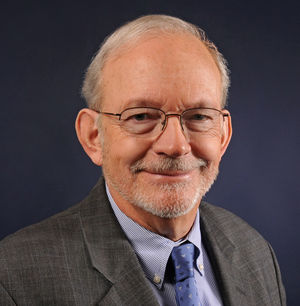
Mr. Anthony Lake, Executive Director of UNICEF
Around the world today, there is a growing global ‘movement’ of children and adolescents – but not the kind of movement that generates many ‘likes’ on social media.
It is a movement made up of 50 million children on the move.
More than half of them have been forcibly displaced by conflict. Some are escaping violence and persecution. Others are searching for a way out of crushing poverty or the intensifying impact of climate change. Some have experienced the compounded harm of all of these horrors and hardships.
All are vulnerable: to the dangers of the journey itself, all too often deadly; to smugglers and traffickers who prey on these children for profit; to being detained or deported; to hunger, malnourishment, disease; to discrimination, xenophobia and violence; and to a gaping absence of opportunity.
“In 2015–16 alone, about 300,000 unaccompanied children sought asylum in 80 countries.”
Safe channels
Children and adolescents travelling without their families are the most vulnerable to violence, exploitation and trafficking. In 2015–16 alone, about 300,000 unaccompanied children sought asylum in 80 countries – just a fraction of the total number of child refugees and migrants travelling on their own.
This movement of children on the move will grow unless we do more to confront and overcome the root causes that drive so many from their homes. Most fundamentally, the protracted conflicts that have displaced so many millions of people must be resolved, and the political, economic and environmental forces that disadvantage millions more must be confronted.
But success will not come overnight – and these children need help today.
Broadly, that means creating safe and legal channels for children to safely migrate and seek refuge, which can help keep them out of the reach of smugglers and traffickers. It means finding alternatives to detention, where they are particularly vulnerable to harm. It means keeping families together and giving children legal status. And it means challenging xenophobia and discrimination and other barriers that prevent them from accessing health and other services.
Some governments are already taking action. Italy recently enacted the first comprehensive law to protect unaccompanied children. The European Union recently adopted new policy guidance to protect migrant and refugee children, including appointing guardians for unaccompanied children and improving data collection to monitor the situation and safety of children on the move.These practical measures provide a model for all countries to protect uprooted children’s lives and also their well-being. But we must also take steps to protect their futures – by investing in their education.
Uprooted children leave behind so much more than their homes: family, friends, treasured toys and the ordinary routines of childhood. All too often, they also leave behind their education – and a better chance to reach their full potential.
Today, only half of primary school-aged refugee children are enrolled in school. Secondary school enrolment of refugee children is less than 25 per cent. Refugee children are five times more likely to be out of school than their non-refugee peers.
Education in emergencies
If the lens widens to include all children affected by conflicts and emergencies, the numbers are commensurately alarming. An estimated 25 million children living in conflict zones are out of school. Many have never seen the inside of a classroom.
Children do not need education even in emergencies; they need education especially in emergencies. Without an education, how will these children gain the knowledge and skills they need to chart their own futures – and to someday build a more peaceful future for their societies? And how can we hope to achieve any of our development goals when we are not providing children with the tools they need to carry progress forward as adults – essential to sustainable development?
“An estimated 25 million children living in conflict zones are out of school. Many have never seen the inside of a classroom.”
And yet, education in emergencies is severely underfunded. Since 2010, less than two per cent of humanitarian funding has been spent on education – a gap of $8.5 billion. As the world comes together to achieve the Sustainable Development Goals – and to fulfil their promise to “ensure inclusive and equitable quality education” for all – we need to fill this gap.
New global funds to secure stable funding for education in emergencies, as do Education Cannot Wait and new funding mechanisms to support it, are a step in the right direction.
For whether a refugee or migrant, a child is a child. And every child has the right to an education. Their future – and our own – depend on it.
This piece appears in ‘G20: Germany – The Hamburg Summit 2017′, a publication produced by the G7/G20 Group at the University of Toronto’s Munk School of Global Affairs featuring contributions by Heads of State and other high-level participants in the G20 Summit.
More featured content