

Education Cannot Wait Interviews UN Special Rapporteur on the Situation of Human Rights in Afghanistan Richard Bennett
Richard Bennett was appointed as the Special Rapporteur on the situation of human rights in Afghanistan in April 2022. He has served in Afghanistan on several occasions in different capacities, including as the Chief of the Human Rights Service with the United Nations Assistance Mission in Afghanistan. He has previously played a role in the promotion and protection of human rights in Afghanistan and supported the United Nations on a number of human rights issues, such as protection of civilians, transitional justice, child rights, rule of law, rights of people with disabilities, protection of human rights defenders and a range of economic, social and cultural rights.
Bennett also served with the United Nations as the Representative of the High Commissioner for Human Rights and head of the human rights components of peacekeeping operations in Sierra Leone, Timor-Leste and South Sudan – as well as twice in Afghanistan (2003-2007 and 2018-2019). He has been a long-term adviser to the Afghanistan Independent Human Rights Commission. From 2007 to 2010, Bennett was the Representative of the High Commissioner for Human Rights in Nepal and head of OHCHR’s office there. He has also been Chief of Staff for the UN Secretary-General’s Panel of Experts on Sri Lanka and Special Adviser to the Assistant Secretary-General for Human Rights in New York.
Bennett worked for Amnesty International from 2014–2017 initially as its Asia-Pacific Program Director, and later as head of Amnesty’s United Nations Office in New York. From mid-2019, he worked as a consultant on UN human rights assignments in Afghanistan, Myanmar and New York.
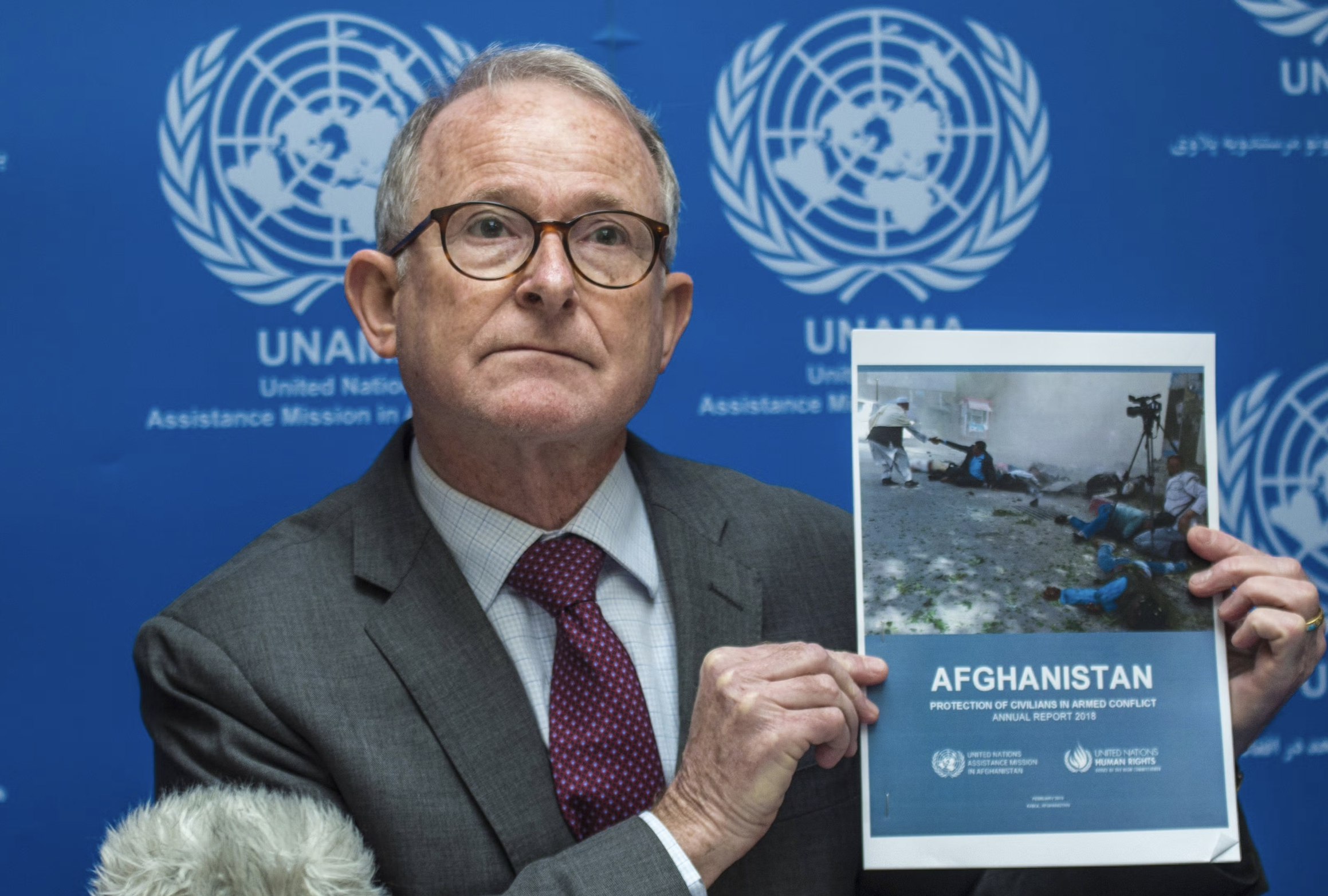
ECW: For more than three years, girls in Afghanistan have been banned from attending school beyond the sixth grade. In your latest report to the UN General Assembly, you describe a worsening human rights situation under the de facto authorities, particularly for girls and women. What impact is the education ban having on Afghan girls and on Afghan society as a whole?
Richard Bennett: The ban on education for girls above the sixth grade is of course having a devastating impact on Afghan girls. They see their future lives and opportunities having been narrowed almost entirely to the domestic sphere, and this, combined with the prospect of early or forced marriage, has driven thousands of them into depression. Self-harm, including suicides and suicidal ideation, has risen dramatically. Families are being torn apart, with siblings separated, and communities fractured. The education ban is impacting Afghan society as a whole. Let alone the denial of the fundamental right to education, no society can prosper if half the population is not able to contribute to its economy. The long-term consequences include deepening poverty and gender inequality, an increase in gender-based violence and child marriage, and more child labour and other forms of exploitation. The devastating consequences will be intersectional and intergenerational. Education is a fundamental right and also provides crucial protection. Society as a whole suffers almost irreparably when half the population is systematically excluded from life opportunities.
ECW: Despite the ban, many girls and young women are finding alternative ways to continue to learn. Why is it crucial for donors to continue funding multilateral organizations, such as Education Cannot Wait, who are working together to provide education access and support to Afghan girls and women?
Richard Bennett: Continuing donor support for organizations like Education Cannot Wait is crucial in this time of crisis for girls’ education in Afghanistan. Despite the ban, alternative and informal educational pathways are emerging to offer hope and learning opportunities for Afghan girls and women. However, for these programmes to be effective, resilient and safe, they must be equipped with adequate resources and expertise to support both student learning and emotional well-being.
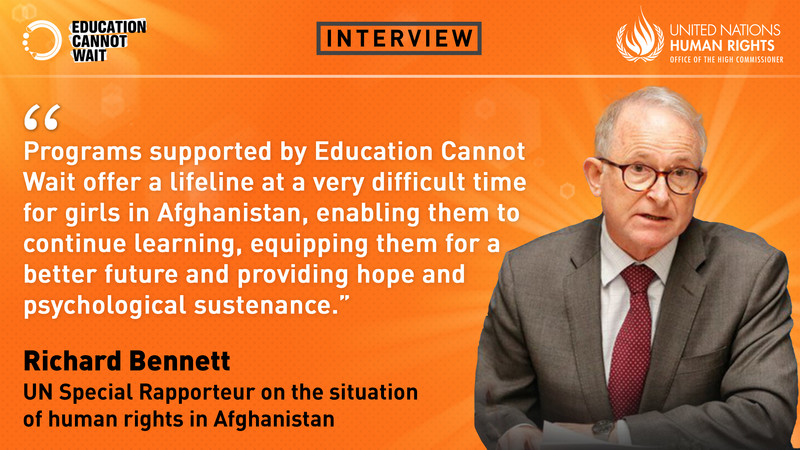
Programmes supported by Education Cannot Wait offer a lifeline at a very difficult time for girls in Afghanistan, enabling them to continue learning, equipping them for a better future and providing hope and psychological sustenance. Moreover, they align with the international community’s commitment to the right to education as a universal value and do so within the principles of universality and inclusion.
Funding ECW’s initiatives is not only an investment in resilience and gender equality, but also in the future of today’s children – and, ultimately, in the prospects for peaceful, sustainable, long-term recovery of Afghanistan. Without such support, millions of girls and young women risk being left in the shadows, perpetuating cycles of despair and marginalization.
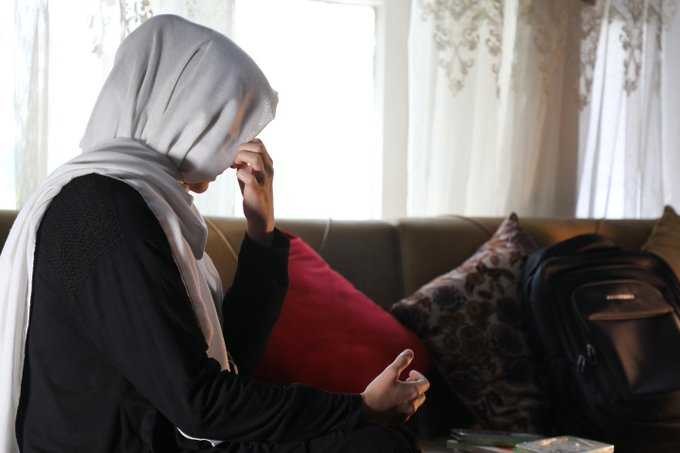
ECW: Your analysis emphasizes that the denial of girls’ and women’s right to education is part of a broader system of gender-based oppression amounting to "gender persecution," a situation that many Afghans and human rights advocates describe as "gender apartheid." Could you elaborate on this concept and explain why it needs to be urgently addressed?
Richard Bennett: The Taliban’s system of discrimination, segregation, disrespect for human dignity, and exclusion is pervasive and methodical. It is enforced through edicts, decrees and policies, often with strict implementation and sometimes violent punishment for transgressions. Every restriction on the rights of women and girls – whether on their rights to education, healthcare, freedom of movement, access to justice, or women’s right to work – is interlinked and mutually reinforcing.
Cumulatively, these deprivations are so severe and extensive, I have concluded that they may amount to crimes against humanity, in particular the crime of gender persecution. These are crimes under international law. They are not only ongoing, they are intensifying.
Further, in my discussions with Afghans, especially women, they consistently emphasize that the term “gender apartheid” most accurately describes their lived experiences and best captures the ideological and institutionalized nature of the Taliban’s discrimination and oppression of women and girls. There is a growing movement, which I support, advocating for the formal codification of gender apartheid in a future treaty on crimes against humanity.
Whether we describe what is happening in Afghanistan as gender persecution or gender apartheid, it is clear that the situation is not only unacceptable – it is unconscionable. We all have a collective responsibility to challenge and dismantle this appalling system and to hold those responsible to account.
ECW: You have been an early supporter of Education Cannot Wait’s #AfghanGirlsVoices global advocacy campaign, which amplifies testimonies of Afghan girls denied access to education and who are fighting for their rights. What message would you like to share globally to further mobilize support for their right to education?
Richard Bennett: To the global community, I say this: the courage and resilience of Afghan girls fighting for their right to learn is nothing short of heroic. Their voices remind us that education is a fundamental right, not a privilege. We must amplify their stories and rally resources to ensure they are heard everywhere and are not forgotten.
My personal interactions with Afghan girls, whether they are 11th grade students I met in the north of Afghanistan in 2022 who continue to pursue education despite the subsequent closure of their school, or the survivors of the Kaaj Academy bombing who I’ve met in Kabul, Türkiye and Europe, or the members of the winning Afghan Girls’ Robotics Team, they continue to inspire and motivate me. The world must stand in solidarity with Afghan girls and women, sending a clear message that their dreams and potential matter and that the denial of education to them is an injustice that may rise to the level of a crime against humanity.
Together, we can create pathways to hope and opportunity, even in the face of adversity. The message is clear: we cannot allow the dreams and potential of millions of Afghan girls to be extinguished. The time to act is now, and every effort counts.
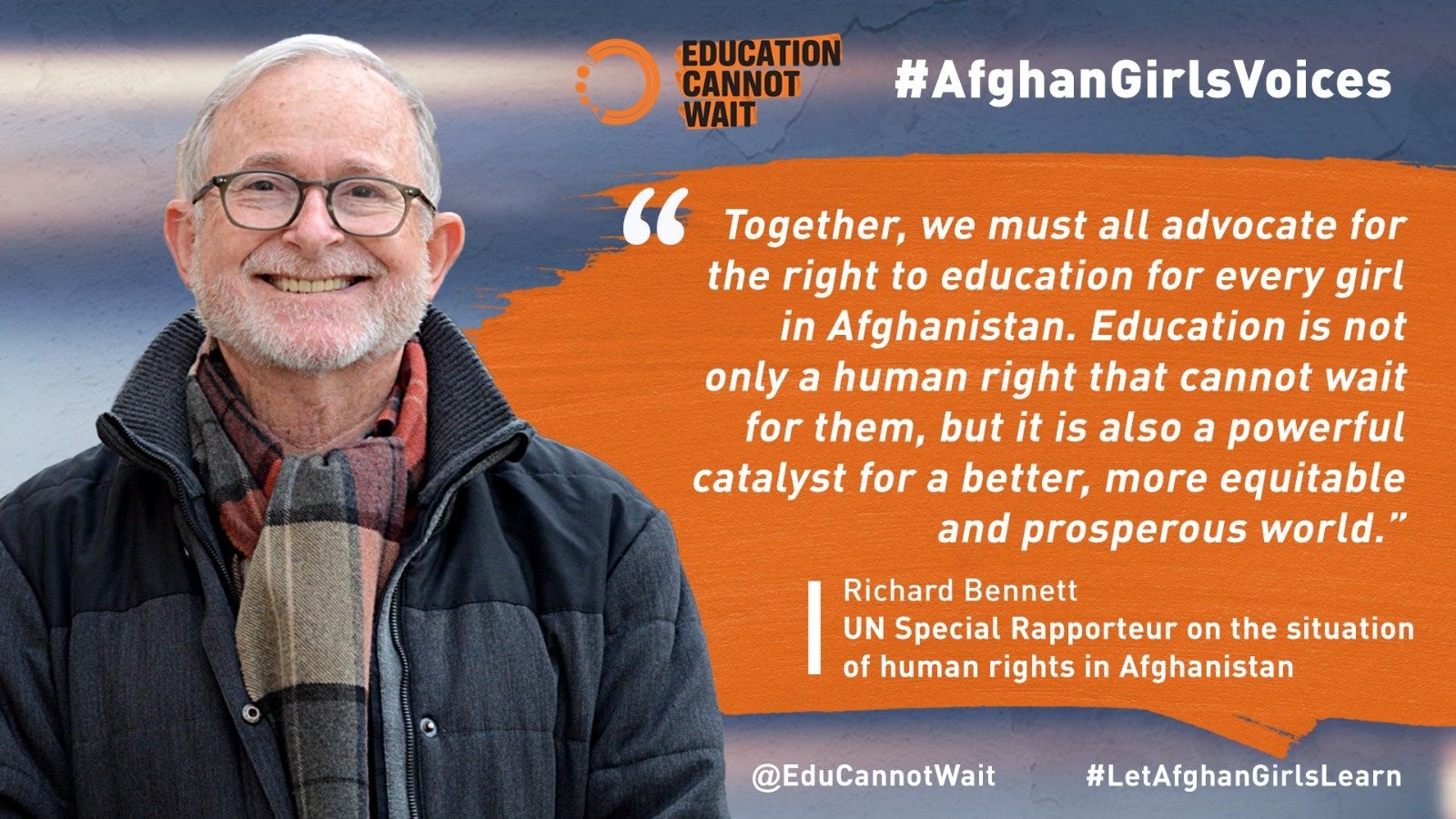
ECW: We know that ‘readers are leaders’ and that reading skills are key to every child’s education, no matter who or where they are. What are three books that have most influenced you personally and/or professionally, and why would you recommend them to others?
Richard Bennett: It’s hard to choose three, but here is my list:
No Good Men Among the Living: America, the Taliban, and the War Through Afghan Eyes by Anand Gopal; often the first book I recommend to newcomers to Afghanistan and essential reading for those who wish to understand how America got it so wrong.
A Fine Balance by Rohinton Mistry; Almost 30 years ago, I read this exquisitely written, somewhat bleak but transformative novel set in India and it left an indelible mark on me. The balance is, of course, between hope and despair, so relevant for Afghans today.
Outspoken: My Fight for Freedom and Human Rights in Afghanistan by Sima Samar; published in 2024, this memoir by my first boss in Afghanistan is recommended reading for Afghan girls and boys looking for a role model. She is a doctor, human rights defender and, not least, the founder of schools and a fighter for girls’ education.
More featured content