

Education Cannot Wait Interviews Dr. Kuyok Abol Kuyok, Minister of General Education and Instruction for South Sudan
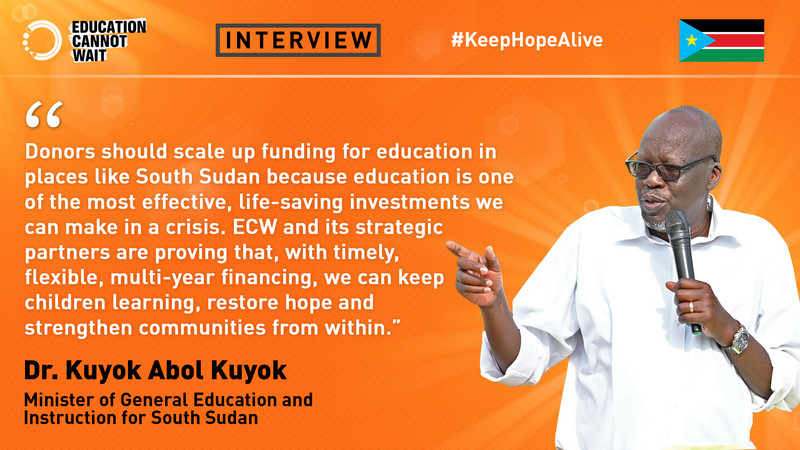
Dr. Kuyok Abol Kuyok has served as South Sudan’s Minister of General Education and Instruction since March 2025. Previously, he served as the Ministry’s Undersecretary for five years and worked at the Anti-Corruption Commission for five years. As Minister, he leads the country’s entire education sector, setting the vision, policy direction and standards for learning. He also oversees the education budget, coordinates with key stakeholders and tackles challenges such as equity, teacher training and infrastructure gaps.
ECW: What are the key priorities for advancing education in South Sudan and how has multilateral support from Education Cannot Wait (ECW) and our strategic donors contributed to this vision?
Dr. Kuyok Abol Kuyok: As we have set out in our Education Sector Plan 2023–2027, key priorities for advancing education in South Sudan include:
- Expanding equitable access and reducing the number of out-of-school children. We are prioritizing girls, children affected by crisis, children with disabilities and those in hard-to-reach counties. Through ECW’s Multi-Year Resilience Programme (MYRP), over 190,000 learners (46% girls) have gained access to education through both formal and Alternative Education Systems such as Accelerated Learning Programmes and Pastoralist Education Programmes.
- Sustainably improving the quality of education. The ultimate objective is to ensure that children in schools are truly learning. We are focusing on foundational skills, including early grade literacy and numeracy, as well as teacher training, recruitment and remuneration. We also aim to enhance curriculum development and implementation and strengthen the assessment system. The ECW-funded MYRP, which includes US$10 million in GPE funding, remains instrumental in this area.
- Increasing education financing and strengthening governance. Expanding access and improving the quality of education requires both adequate resources and effective planning and coordination at all levels. While the economic situation remains challenging, education continues to be our top priority. We are grateful to partners such as ECW, GPE, the World Bank and other funders for their support – especially at a time when humanitarian and development funding is declining globally.
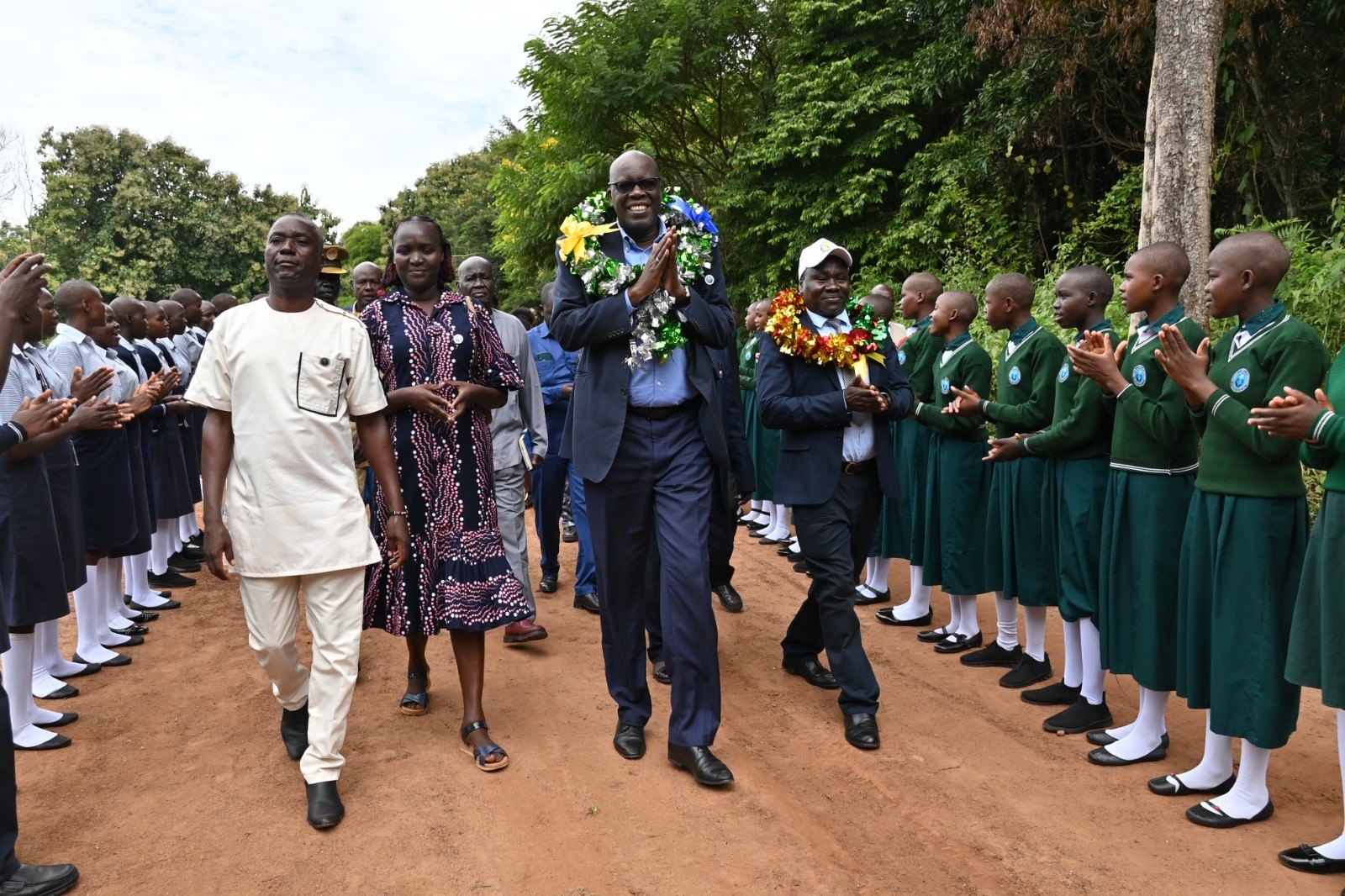
ECW: What role do partnerships – local, regional and international – play in your strategy to deliver quality education for all children in South Sudan?
Dr. Kuyok Abol Kuyok: Given the country’s protracted crises, the scale of education needs and ongoing efforts to build the national education system, partnerships are central to achieving equitable inclusive and resilient education outcomes. Through our partnership with ECW, we have been able to significantly expand access to education for girls and boys, including children with disabilities, improved teacher training and invested in safe learning spaces through Multi-Year Resilience Programming and humanitarian- development coherence. We now have an Inclusive Education Policy and learning materials have been transcribed into braille and audio format for learners and teachers with sight impairment.
Through partnership with stakeholders at the grassroot level, we have been able to develop a context appropriate Emergency Preparedness and Response Plan, and this is improving our preparedness and reducing vulnerability of the sector. We acknowledge the fact that local stakeholders understand the issues that affect them better than anyone, so we have meaningfully engaged them in various strategy and policy-making processes for sustainability. We have also had regional partnerships mainly on knowledge-sharing and cross-learning purposes as we build our education systems. The Education Sector Plan is comprehensive and guiding our strategy and efforts towards delivering quality education for all children in South Sudan.
By combining the insights of communities, the regional technical ecosystem and the resources of international partners, we are building an education system that is more inclusive, resilient to shocks, more accountable to the children and communities, and better aligned with South Sudan’s long-term education vision.
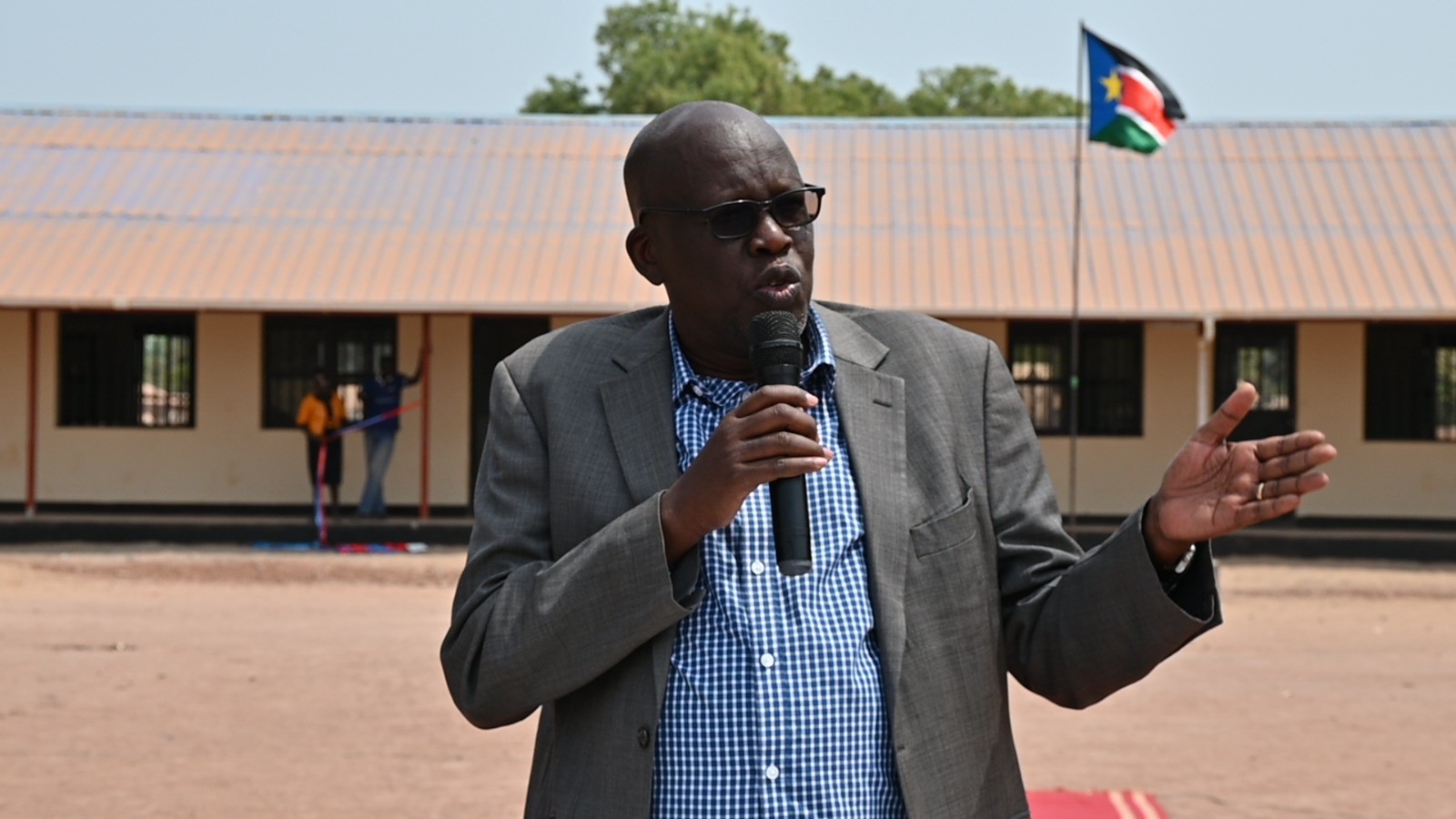
ECW: In a world of competing priorities, ECW and its strategic partners are catalyzing efforts to #KeepHopeAlive through our life-saving education responses. Why should donors scale up funding for education in places like South Sudan?
Dr. Kuyok Abol Kuyok: Donors should scale up funding for education in places like South Sudan because education is one of the most effective, life-saving investments we can make in a crisis. In a world of competing priorities, education is not a secondary concern – it is the foundation that protects children from forced recruitment into armed groups, exploitation, child marriage and long-term poverty. When conflict and climate shocks disrupt learning, children lose not only their classrooms but their safety, stability and future prospects.
ECW and its strategic partners are proving that, with timely, flexible, multi-year financing, we can keep children learning, restore hope and strengthen communities from within. Every dollar invested helps create safe learning spaces, train and support teachers, provide psychosocial care, and ensure girls and the most vulnerable children are not left behind. Scaling-up funding is not just about closing an education gap – it is about breaking cycles of crisis, empowering the next generation, and giving millions of children the chance to hope, dream and rebuild their country.
ECW: How do ECW investments in South Sudan address gender disparities to ensure that all children, especially girls and marginalized groups, have equal opportunities to quality learning opportunities?
Dr. Kuyok Abol Kuyok: ECW’s investments in South Sudan have a huge positive impact on attaining gender equity. This is primarily because ECW MYRP initiatives are deliberately designed to close gender gaps and ensure that every child – especially girls and other marginalized learners – can access safe, inclusive and quality education.
Through our MYRP, ECW investment targets counties with the highest gender disparities and supports community-driven approaches that address the real barriers keeping girls out of school, such as poverty, child marriage, insecurity and menstrual stigma. ECW funding provides tailored support to vulnerable girls, supports the distribution of dignity kits and trains learners on menstrual hygiene management, strengthens school-based child protection systems, and expands safe learning spaces where girls feel protected and welcomed. Teacher training includes gender-responsive pedagogy and safeguarding, while community mobilization campaigns challenge harmful norms and encourage families to prioritize girls’ education. For marginalized groups (including children with disabilities, those internally displaced, affected by conflict and returnees), ECW invests in inclusive learning materials, psychosocial support, disability-friendly infrastructure and accelerated education pathways. These combined interventions ensure that gender and inclusion are not add-ons, but core pillars of ECW’s work to ensure that every girl and every vulnerable child in South Sudan can learn, thrive and reach their full potential.
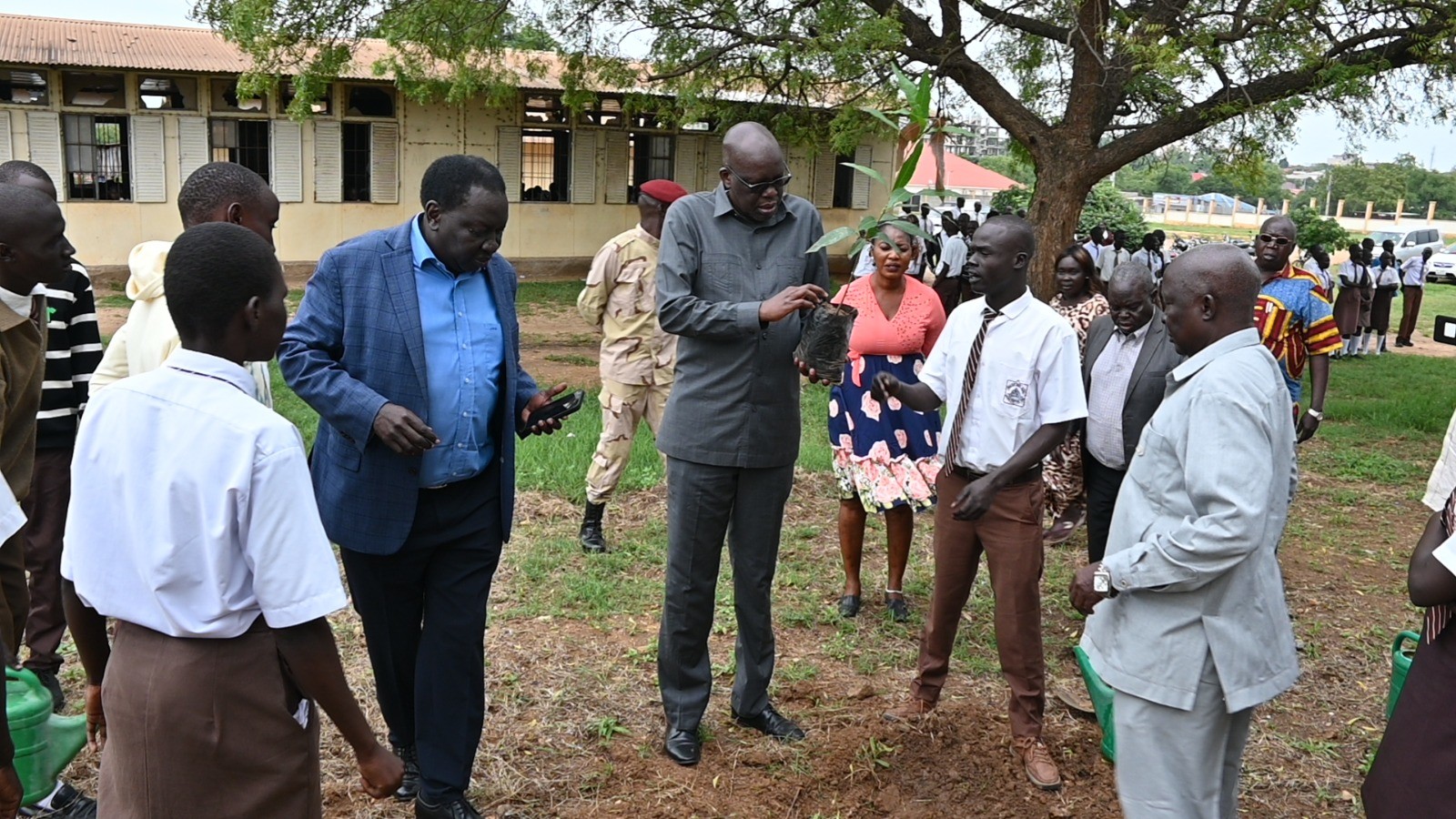
ECW: We all know that ‘readers are leaders,’ and that reading skills are key to every child’s education. What are three books that have most influenced you personally and/or professionally?
Dr. Kuyok Abol Kuyok: As an academic, I have obviously been exposed intellectually to a diversity of books. However, I can cite three wonderful books:
- Long Walk to Freedom by Nelson Mandela
Madiba’s (Mandela’s Thembu clan name) book has been a guiding compass in my leadership journey. Mandela’s humility, courage and unshakeable belief in human dignity remind me that leadership is ultimately an act of service. His resilience through adversity inspires my commitment to ensuring that every child, no matter their background, has the opportunity to learn, hope and build a better future. - The Pedagogy of Hope by Paulo Freire
As a Minister responsible for shaping the future of our education system, Freire’s work speaks deeply to me. He reminds us that education is not simply the transmission of knowledge; it is an act of liberation and empowerment. His vision strengthens my resolve to build an education system that uplifts the marginalized, promotes critical thinking and gives every learner the tools to shape their own destiny. - The Boy Who Harnessed the Wind by William Kamkwamba and Bryan Mealer
This story exemplifies the power of creativity, determination and education. It reminds me that talent exists in every village, in every child – what is missing are the opportunities and resources. As a Minister, this book fuels my belief that with the right support, children in South Sudan and across the continent can innovate, solve problems and drive national development.
More featured content