


ECW in Syria
For well over a decade, children in Syria have grown up in the midst of a conflict that has consistently disrupted access to education. This has also led to the internal displacement of millions, including children who account for half of that population. This widespread displacement of families, and the destruction or damage of thousands of schools, has resulted in children being unable to attend school – increasing their vulnerability to child labor, child marriage, trafficking and recruitment into armed groups. As Syrians work to shape a new future for their country, access to safe, inclusive and quality education remains uneven, particularly for internally displaced children, girls, children with disabilities and those living in hard-to-reach or newly accessible areas.
Education Cannot Wait investments have been supporting partners and education programmes in Syria since 2017. Investments include a focus on providing safe school environments, remedial classes, self-learning programmes, mental health and psychosocial support, disability inclusion, and building sustainability and resilience within a challenging education system.
Programme Info
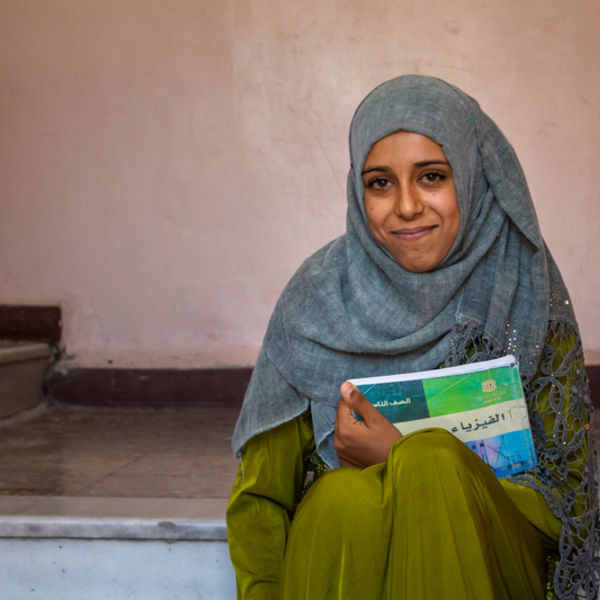
Attacks on schools and shocks to the national economy continue to disrupt education for children and adolescents. The adverse effects of COVID-19 further increased the number of children out of school. This number was already in the millions before the pandemic. Across Syria, online platforms, distance learning and home-based education interventions have been introduced. However, with the limited internet connectivity and restrictions in people’s movement, the effective implementation of interventions has been challenging.
To support children and adolescents with greater access to education, ECW funded an Initial Investment in Syria from 2017 to 2019, followed by the roll-out of a Multi-Year Resilience Programme (MYRP). First Emergency Responses (FERs) have also been launched to respond to escalating emergencies.
The multi-year investment supports partners in providing safe access to learning sites, improving quality education through teacher training, implementing inclusive psychosocial support methodologies for girls and in monitoring attacks on schools. Previously, out-of-school students caught up on missed schooling through remedial courses. Mental health and psychosocial support (MHPSS) services and recreational activities holistically support students and their well-being. Additionally, safe school environments are promoted and implemented to protect children against sexual violence.
Programme Components
- Improving mental health and psychosocial support. Children in both formal and non-formal education settings benefit from psychosocial support and recreational activities to ensure a holistic approach to their well-being. Those children identified with additional needs are referred to specialized centres for behavioural issues, health services and protection.
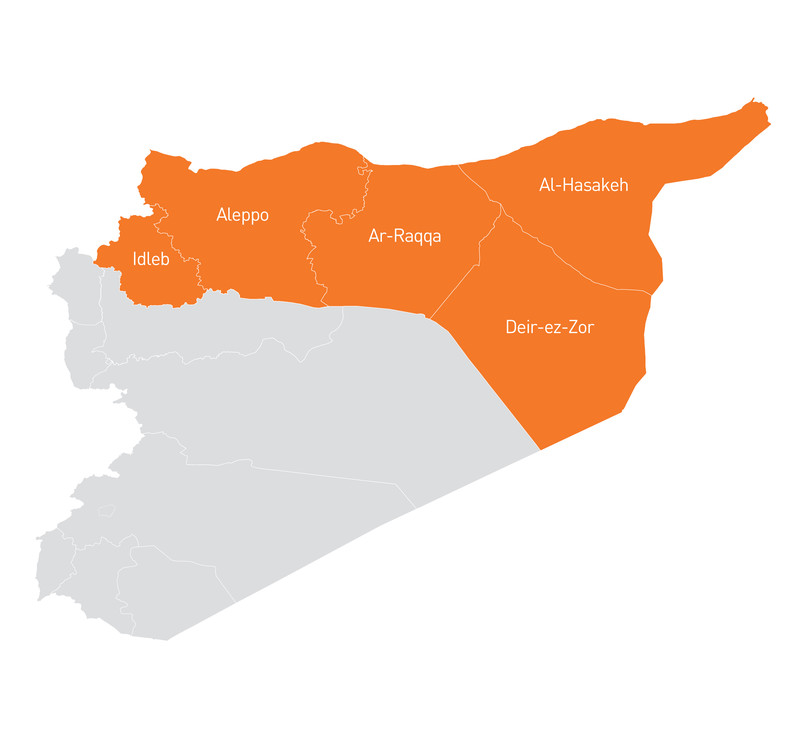
- Increasing access to education. New, temporary spaces are established or rehabilitated and equipped with gender-segregated water, sanitation and hygiene (WASH) facilities, desks, whiteboards and solar panels where feasible. Children are provided with transportation to learning sites due to safety concerns and issues of mobility. Across Aleppo, Al Hasakeh and Idleb, children benefit from formal and non-formal education, which includes remedial and catch-up instruction, literacy and numeracy classes and self-learning programmes.
- Monitoring and responding to attacks against education. An ECW-supported education surveillance system to monitor attacks on schools is now in place in north-west Syria. The system produces operational alerts for the education sector that allows for a quick and timely response coordinated among the sectors. Project managers and technical experts map all schools across the northwest, allowing for reporting to be standardized and aligned across systems. Reports are generally produced within 12 hours of an attack.
- Promoting equal access to education services for girls and boys. Grantees trained education personnel to specifically work with girls and implement inclusive psychosocial support methodologies. This includes participatory sessions on peer-to-peer relationships and gender to promote girls’ equal participation. To protect children against sexual exploitation, partner staff, teachers and education personnel are trained on methods to foster safe school environments.
- Supporting teachers. To improve instruction quality, teachers and educational personnel build their capacity through training. Topics include pedagogy, education in emergencies, mainstreaming child protection principles in schools, and foundational social-emotional and life skills. Training also covers the preparation of digital study materials, home-based learning and follow-up with children, and COVID-19 preventive measures. Teacher circles are created to provide peer support through the exchange of information and sharing of experiences.
For more information on ECW's work in Syria, please contact Country Lead Nasser Faqih (nfaqih@unicef.org).
News & Stories
Related News & Stories
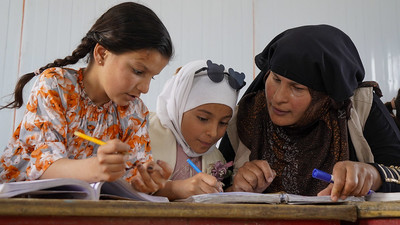
Education Cannot Wait investments support teacher training and continued learning for displaced children in UNICEF-run school in Syria
ECW-supported UNICEF Learning Centres help children affected by crisis, like Nizar, overcome adversity and reclaim their education in Syria